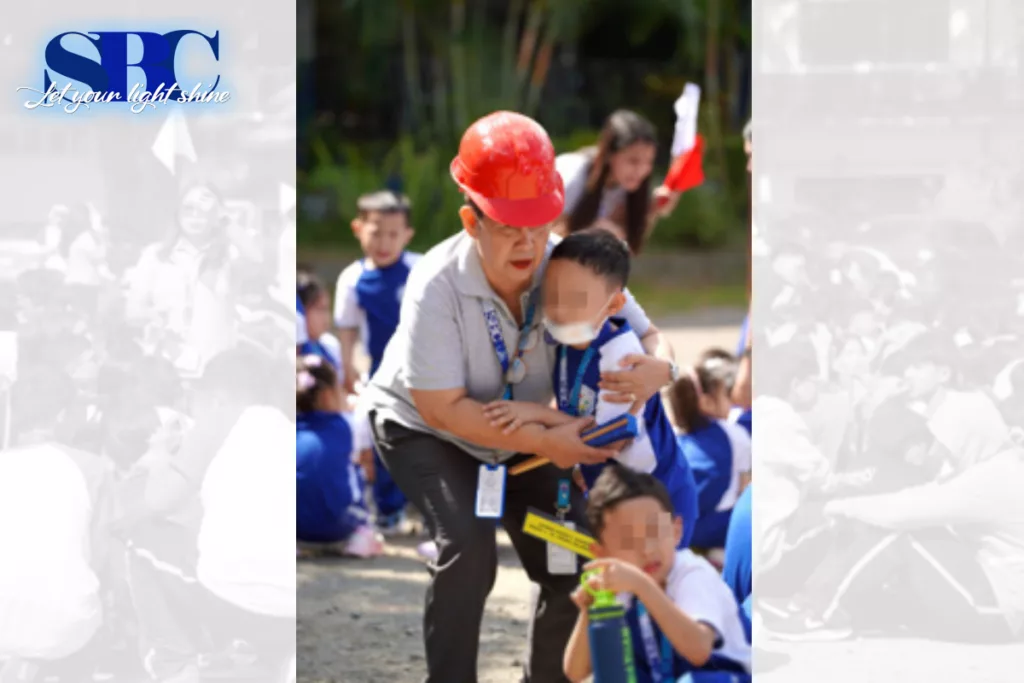
Reinforcing its commitment to disaster preparedness and safety awareness among its community, St. Bridget College, Inc. actively participated in the Nationwide Simultaneous Earthquake Drill (NSED) on June 18, 2026, at 9:00 AM.
The drill engaged a wide range of participants, including SBC administrators, faculty members, staff, parents, and students from the Basic Education and College departments.
The Religious of the Good Shepherd (RGS) Sisters also took part, along with designated committees who facilitated and supervised the conduct of the activity.
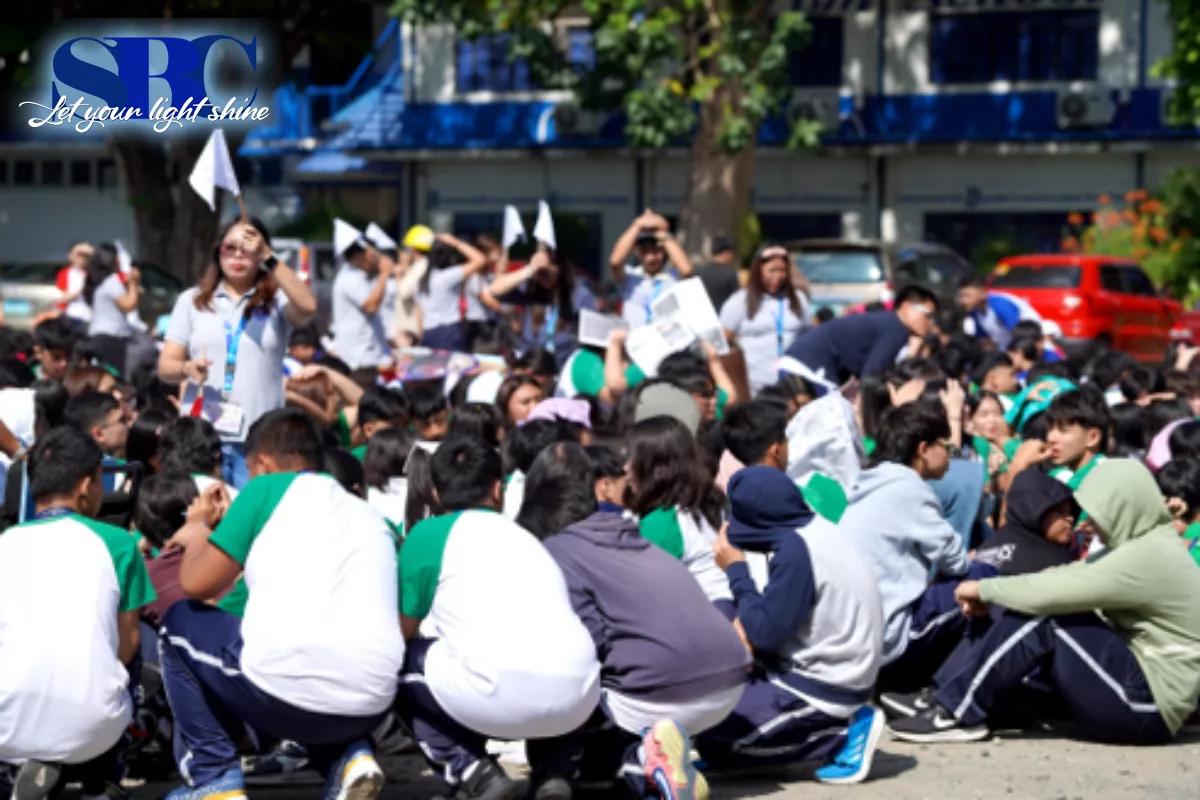
At the sound of the alarm, which signaled the start of the drill, participants promptly executed the standard earthquake safety procedure, “Duck, Cover, and Hold.”
During this phase, individuals quickly lowered themselves to the ground, took cover under sturdy furniture such as desks or tables, and held on firmly to protect themselves from potential falling debris and strong shaking.
Some participants also demonstrated awareness of nearby hazards by staying away from glass windows, shelves, and objects that could fall.
After the shaking simulation, evacuation procedures were carried out in an orderly manner.
Participants calmly exited classrooms and offices while ensuring that safety protocols were followed, such as avoiding pushing or running. Teachers conducted quick headcounts and guided students to ensure that no one was left behind.
Following the initial response, participants systematically moved toward their designated evacuation areas.
Guided by marshals, committee members, and faculty, Basic Education (BED) participants made their way to Pastor’s Field, while those from the College and Institutional Programs and Services (IPS) departments headed to the open space near the RGS convent.
The drill lasted approximately 4 minutes and 54 seconds, which showcased the community’s coordination, discipline, and readiness.
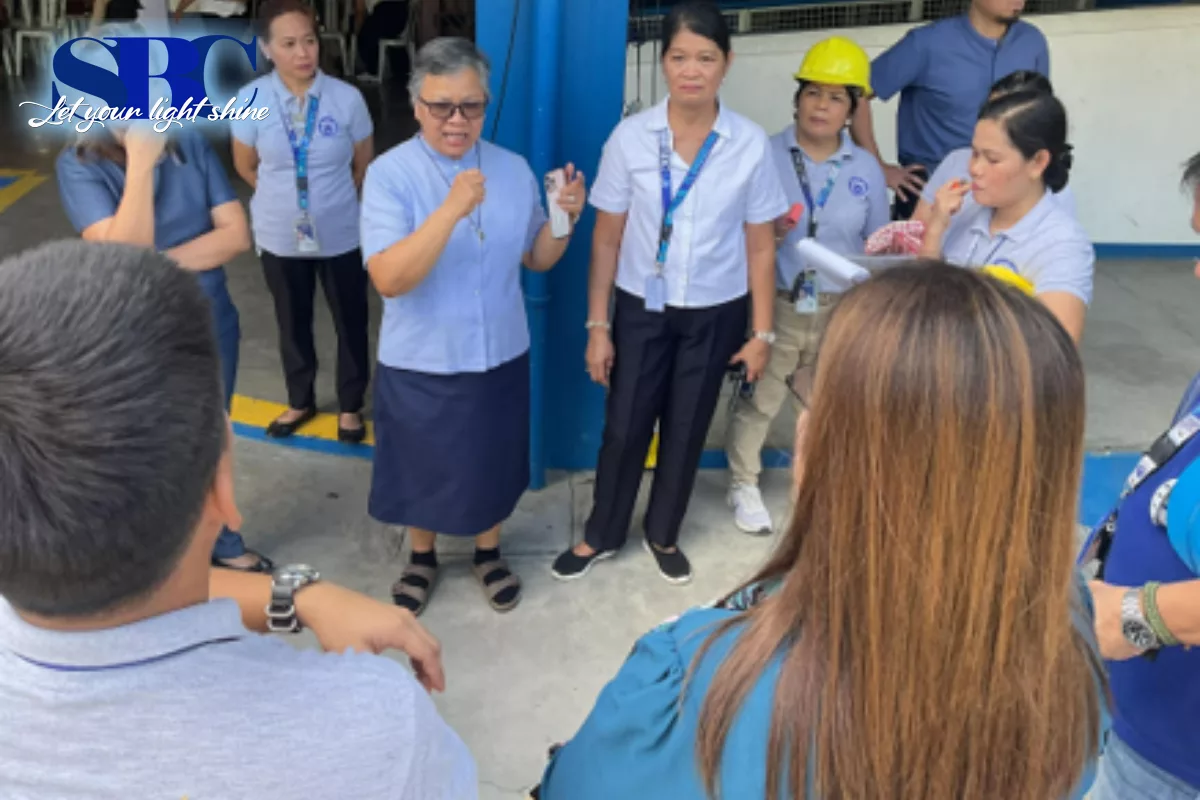
To ensure organized movement and clear communication, teachers and designated personnel utilized red and white flags to signal instructions.
These visual aids proved effective in directing participants and maintaining order during the simulated emergency.
A post-assessment was conducted after the drill to evaluate its effectiveness and identify areas for improvement.
During the assessment, Sr. Ma. Añanita Borbon, RGS, PhD, college president, together with members of the Institutional Emergency Evacuation Committees, emphasized the need to identify key point persons who will be responsible for giving clear and immediate instructions during actual emergencies to ensure a more efficient and organized response in real-life situations.
The assessment also pointed out the need for the administration to direct its efforts toward identifying key personnel to provide clear and timely instructions, improving communication in low-audibility areas, and strengthening coordination to address these concerns.
By:
Dr. Imelda B. Vergara
Institutional Research, Planning and Publications Officer